
What No One Tells You About Store-Bought Flour & Why It’s Important
This post may contain affiliate links. Please read our disclosure policy.
Most people never learn what actually happens to store-bought flour before it reaches their kitchen. After you see how store-bought flour is processed and which nutrients disappear, choosing flour that supports better baking and better nutrition becomes much easier.
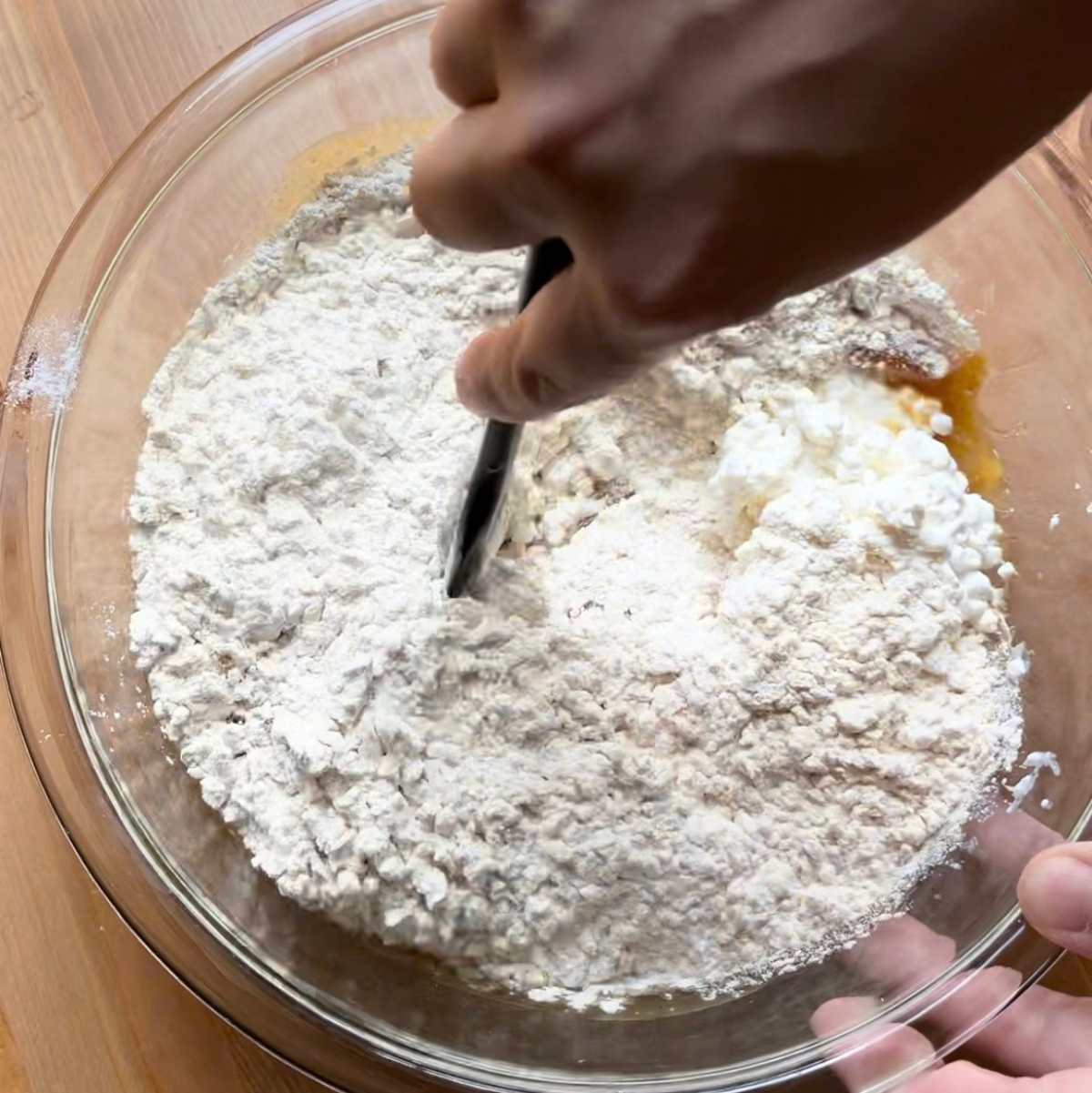
The Truth About Modern Wheat and Store-bought Flour (and Why It’s a Problem)
Walk into any grocery store, and you’ll find shelves lined with flour. All-purpose, whole wheat, bleached, and unbleached. Most people don’t realize that the wheat we use today looks nothing like the wheat our grandparents baked with.
Over the last 60 years, growers have hybridized wheat to boost yield and shelf stability rather than nutrition.
As a result, modern wheat:
- contains higher levels of gluten
- it is often grown with heavy pesticide use
- is more likely to cause digestive issues
- has a shorter shelf life unless heavily processed
When you buy conventional flour, manufacturers strip away the most nutritious parts of the grain, especially the germ and bran, to keep it from spoiling. You end up with a shelf stable product that lacks many of the natural vitamins, minerals, and fiber.
But here’s why that matters:
The bran is the outer layer of the grain. This part of the grain provides fiber, antioxidants, and B vitamins that support digestion, blood sugar balance, and gut health.
The germ is the nutrient rich core, loaded with vitamin E, healthy fats, magnesium, and phytonutrients. It’s literally the life giving part of the grain.
When the germ, bran, and endosperm stay together, the way nature intended, you’re not just getting flour. You’re getting a whole food — nutrient-dense, full of flavor, and far more supportive to your body than anything sitting on a shelf in a bag.
Why Store-bought Flour Loses Its Nutrition
Even when wheat starts out nutrient-rich, processing changes everything. Once milling breaks open the grain, the natural oils in the germ oxidize quickly. This causes the flour to go rancid fast, which is why large manufacturers remove the germ and bran entirely.
It makes the flour last longer, but it also removes the nutrients your body actually needs.
Research and milling industry data show:
- up to 90 percent of vitamin E is lost when the germ is removed
- most B vitamins and minerals disappear when the bran is taken out
- flour is often bleached to improve color and texture
- synthetic vitamins (“enriched flour”) are added back in, but they don’t function like real nutrients
So essentially, most store-bought flour is no longer a whole food. You end up with a refined starch that’s made for shelf life instead of nourishment.
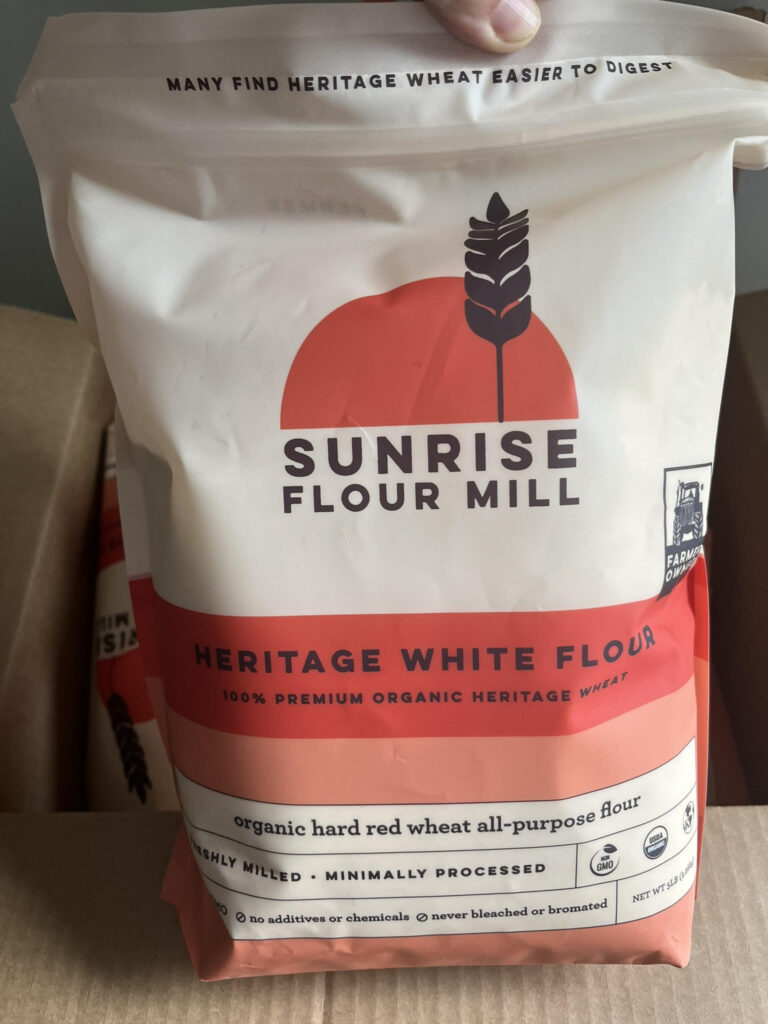
Heritage and Organic Grains: Why Sunrise Flour Mill Stands Out Over Store-bought Flour
If you’re not ready to dive into milling your own flour yet, Sunrise Flour Mill is one of the best places to start. They’ve built a strong following in the from-scratch community by using heritage and organic grains that haven’t been hybridized the way modern wheat has.
Based on research from Sunrise Flour Mill’s own documentation and industry sources:
- They use heritage wheat varieties, which tend to be gentler on digestion
- Their grains are organically grown, reducing exposure to pesticides
- Their flour still contains the naturally occurring nutrients found in wheat
- Many people who struggle with conventional flour tolerate heritage wheat better
- Their grinding process retains more of the grain’s natural flavor and nutrition
Heritage grains don’t just taste better. They behave differently in baking too. The protein structure is less aggressive, the flavor is richer, and the body often recognizes it as a real food rather than a processed product.
For busy moms who want better ingredients without buying a grain mill yet, Sunrise Flour Mill is a great bridge between store-bought flour and freshly milled flour.
Try out Sunrise Flour Mill here! You’ll automatically ge 20% off with this link!
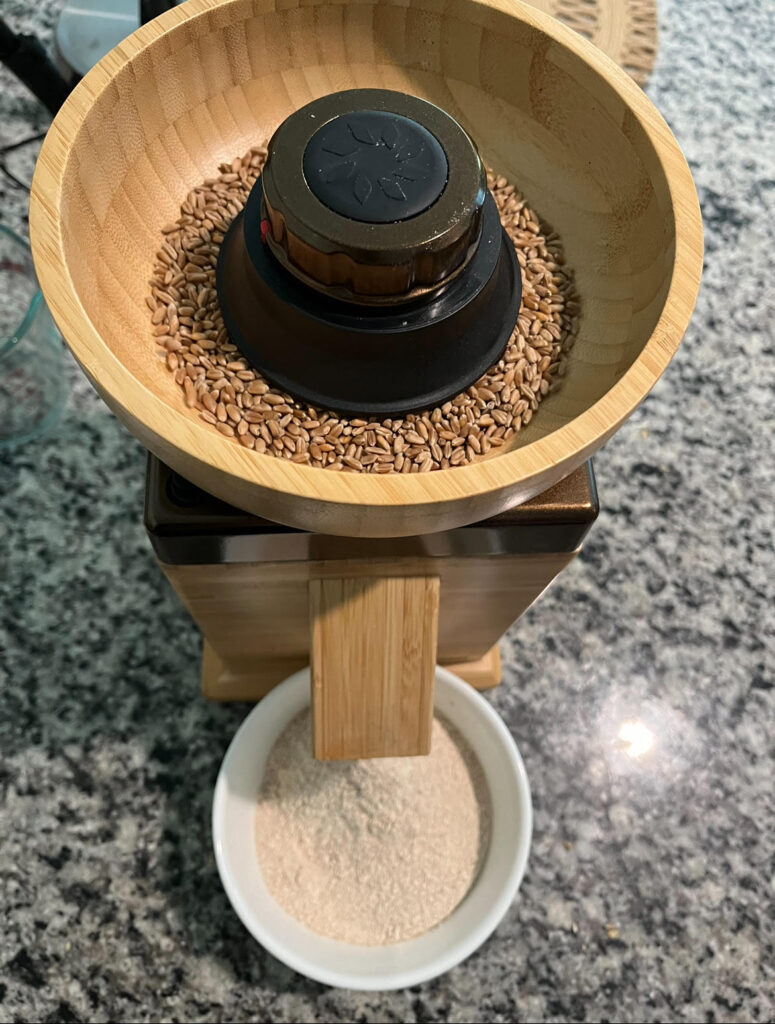
The Case for Milling Your Own Wheat at Home
If you want flour in its most nutrient dense form, milling your own wheat berries is the closest you’ll get to flour as a whole food.
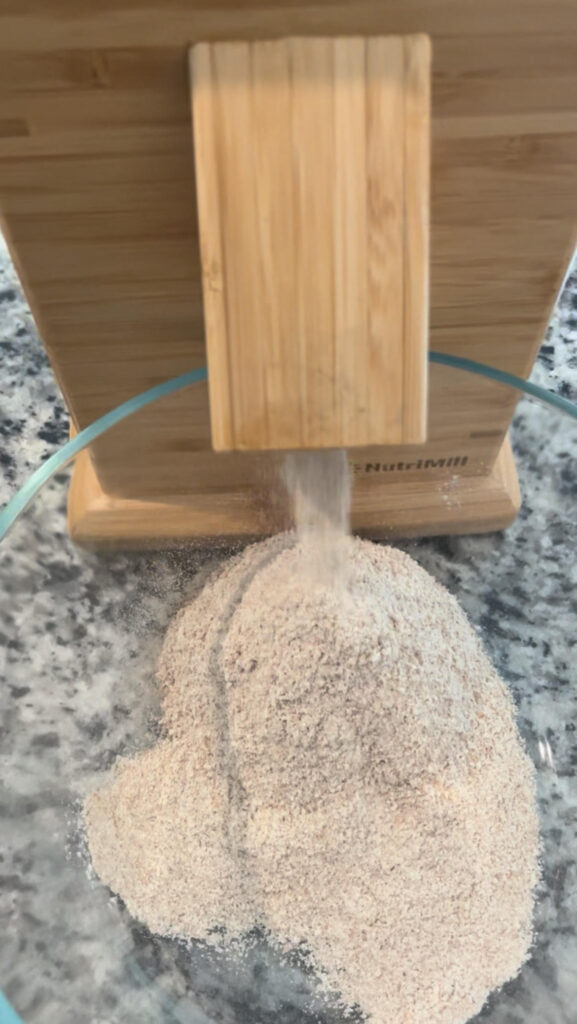
This is where the NutriMill becomes a favorite.
What Makes Fresh Milled Flour Different
When you grind wheat berries yourself, you’re keeping:
- the bran
- the germ
- the endosperm
All fully intact — nothing removed, nothing added back in. This means:
- vitamin E stays in its natural form
- B vitamins remain in the flour
- minerals like magnesium and zinc stay intact
- antioxidants and plant compounds stay active
- the healthy oils are fresh, not oxidized
Freshly milled flour absorbs water differently, tastes sweeter, and behaves like a completely different ingredient. Many people say their body digests it more comfortably because it is a whole, living food.
Why the NutriMill Is a Top Choice
After researching NutriMill and comparing it across the industry:
- It mills flour in seconds
- Produces a soft, finely ground texture
- Works for hard red, hard white, soft white wheat, and more
- Is beginner friendly
- Is durable and well loved in real food kitchens
- Supports consistent baking results
Wheat berries themselves store for years without nutrient loss, so milling becomes both a health upgrade and a budget friendly option long term.
Check out NutriMill here! Use code MEAGHAN for $20 off your order!
Why Freshly Milled Flour Acts Like a Superfood
Did you know that when the bran, germ, and endosperm are kept together, the grain becomes a full-spectrum super food? You get:
- Antioxidants
- Vitamin E
- B vitamins
- Natural fiber
- Healthy fats
- Essential minerals
- Plant compounds that support digestion and blood sugar
You’re not eating something stripped and rebuilt.
You’re eating a whole food the way it grows.
That’s why so many families who switch to fresh milled flour say things like:
- “My bread tastes completely different now.”
- “My kids digest this better.”
- “I can eat bread again.”
- “I never realized flour could be this flavorful.”
It’s a different experience—nutritionally and flavor wise.
How to Start Switching Away from Store Bought Flour
You don’t have to overhaul your kitchen overnight. Here’s a simple, gentle path:
1. Start with Sunrise Flour Mill
A better flour option with rich flavor and improved texture.
2. Buy wheat berries when you’re ready
Hard white is great for beginners.
Soft white is great for muffins and cookies.
3. Invest in a grain mill when it feels right
The NutriMill or another trusted mill will open a whole new world of baking.
4. Practice with simple recipes first
Muffins, pancakes, and tortillas are easiest.
5. Notice the difference
Fresh flour tastes different, rises differently, and often supports better digestion.
Conclusion: What No One Tells You About Store-Bought Flour And Why It’s Important
Understanding what really happens to store-bought flour is empowering, not overwhelming. Once you see how the grain is processed and what gets removed, it makes sense why so many families are turning to heritage flour and fresh-milled options.
Whether you start with Sunrise Flour Mill or jump straight into the world of home milling, choosing fresher flour brings better flavor, better baking, and a more nourishing option for your family.
A small change in your flour can make a big change in your kitchen.
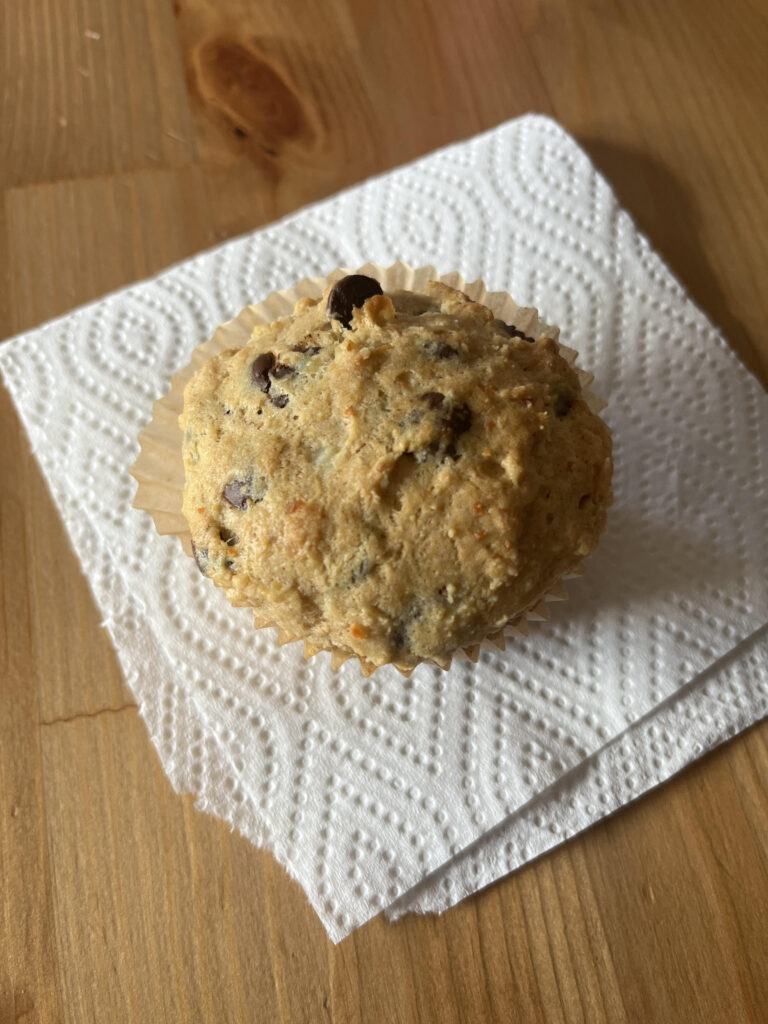
P.S. want to try making one of these recipes with fresh flour. Try my Wake Up Protein Muffins and taste the difference!
